You need a knife you can trust for decades, but the price tags on premium models make your wallet wince. The good news? You don’t need to spend $150 to get a tool that survives daily abuse. A durable Swiss Army knife budget doesn’t mean sacrificing quality; it means knowing which materials, models, and buying strategies actually deliver long-term value.
Many buyers assume that “budget” automatically equals “flimsy.” That is false. The truth is that Victorinox and other manufacturers produce several blades under $50 that are built with the same corrosion-resistant steel and impact-proof scales as their pricier siblings. You just need to know where the cost cuts happen—and where they don’t. This guide will show you exactly how to maximize durability per dollar, avoid common purchasing traps, and pick a knife that will still be in your pocket a decade from now.
What Actually Makes a Swiss Army Knife Durable?
Durability in a Swiss Army Knife comes down to four critical components: blade steel quality, handle material, pivot construction, and the number of moving parts. A budget knife can excel in all these areas if you choose wisely. The steel should be at least 1.4110 stainless (Victorinox standard), the scales should be cellidor or nylon, and the pivot should have a solid locking mechanism.
Blade Steel: The Foundation of Longevity
All genuine Swiss Army Knives use martensitic stainless steel, but not all steel is created equal. Victorinox uses a specific alloy that balances edge retention with ease of sharpening—this same steel appears in their $30 and $300 models. You are not paying for “better” steel on premium knives; you are paying for more tools. A budget model with 2-3 tools will have the same blade quality as a Swiss Champ,Check out our guide on how to find a Durable Swiss Army Knife on a Budget for your next outdoor adventure.
Handle Scales: Cellidor vs. Nylon vs. Metal
Cellidor (the glossy plastic) is durable but can crack under extreme cold or heavy impact. Nylon scales (often called “Economy” or “Evolution”) are actually more impact-resistant and often cheaper. If you need ultimate durability, choose nylon over the classic red cellidor. Metal scales are the most durable but are rarely budget-friendly. For most people, nylon is the best budget durability compromise.
Pivot Mechanism and Tool Lock-Up
Even the best steel fails if the pivot fails. Look for knifes with a solid “slipjoint” construction (no liner lock) or a robust locking system. On budget models, the pivot bushing should be brass (not steel) for smoother opening. Check for vertical blade play—a sign of poor machining. Test the knife before buying if possible.
Tool Count vs. Durability Trade-Offs
More tools mean more points of failure. A 5-function knife is inherently more durable than a 25-function model because there are fewer pivots and springs to break. For a budget purchase focused on durability, aim for 5-8 tools. This gives you daily utility without the complexity that leads to broken toothpicks or bent scissors.
Why Do Some Cheap Swiss Army Knives Break Quickly?
Cheap knives break because of substandard steel, weak springs, or counterfeit manufacturing. Real Swiss Army Knives (Victorinox or Wenger) are built to a high standard, but knock-offs from unknown brands use 420J2 steel (too soft) or 440A (too brittle). If you buy a non-branded knife for $10, you are gambling.
The Counterfeit Trap: How to Spot Fake Knives
Fake Swiss Army Knives flood online marketplaces. Look for the cross logo smooth and flush, the “Victorinox” tang stamp, and the snap of the spring. Fakes often have rough edges on the scales and blades that rust easily. If the price is 50% below the official store price, it is likely fake. A genuine durable Swiss Army knife budget model costs $20-$40, not $5.
Why Springs Fail on Cheap Knives
The backspring provides tension for tools. On quality knives, springs are made from hardened stainless steel that withstands millions of cycles. Cheap springs lose tension after a few hundred openings. You can test this by opening and closing a tool 20 times; if it becomes loose, it is low quality. Budget Victorinox models do not have this issue because they use identical springs across the line.
Corrosion Resistance: The Hidden Budget Killer
You might think stainless steel means rust-proof. It does not. Budget stainless steels have less chromium and molybdenum, leading to pitting. If you live in humid climates, choose a knife with at least 0.45% molybdenum (Victorinox standard). For maximum rust resistance on a budget, consider the “Alox” series—they use a slightly different alloy that resists corrosion even better, and they are reasonably priced.
Which Budget Swiss Army Knife Model Should You Choose in 2025?
Based on current tests and user reviews, the best durable Swiss Army knife for under $50 is the Victorinox Cadet (Alox scales) or the Victorinox Hiker (nylon scales). The Cadet costs about $35 and offers 9 functions including a nail file, while the Hiker costs about $40 and includes a wood saw. Both feature the full steel quality of premium models.
Top 3 Budget Models Ranked by Durability
- Victorinox Cadet (Alox): 9 tools, 84mm, ~$35. Alox scales are indestructible. Best for urban EDC.
- Victorinox Hiker (Economy/Nylon): 13 tools, 91mm, ~$40. Nylon scales resist impacts. Wood saw is tough.
- Victorinox Bantam (Alox): 3 tools, 84mm, ~$25. Minimalist, zero breakage points. Perfect for keychain.
All three retain value and outperform any multi-tool at the same price. For a more detailed price breakdown, you can explore this durable Swiss Army knife budget guide that analyzes regional pricing.
Comparison Table: Budget Models vs. Premium Features
| Model | Price | Tools | Scale Material | Weight | Durability Score |
|---|---|---|---|---|---|
| Victorinox Cadet | $35 | 9 | Aluminum | 46g | 9.5/10 |
| Victorinox Hiker | $40 | 13 | Nylon | 63g | 9.0/10 |
| Victorinox Bantam | $25 | 3 | Aluminum | 32g | 9.0/10 |
| Swiss Champ (Premium) | $120 | 33 | Cellidor | 185g | 8.0/10 |
Note: The Swiss Champ has more features but is heavier and has more parts to break. The Cadet or Hiker offer better durability per dollar.
How to Evaluate Durability Before You Pay?
You can assess durability in 60 seconds without using the knife. Check the blade’s grind symmetry under a light, feel the snap on opening, and ensure the scale screws (if any) are flush. For a budget knife, the only acceptable pivot is a solid brass pin with no visible gaps.
Test for Blade Play and Lockup
Hold the knife tip down and apply lateral pressure to the blade. There should be zero wobble. Then, open the blade halfway and release it—the spring should snap it fully open or closed. If it stops halfway, the spring is weak. This is the #1 indicator of a cheap knife.
Check the Scale Fit and Finish
Run your finger along the junction of scale and liner. It should be perfectly smooth. Rough edges collect dirt and cause corrosion over time. On nylon models, check for injection molding marks. On Alox models, check for even anodizing. Any streaks indicate poor quality control.
Scissor Spring Tension: The Real Weak Point
Scissors on budget knives often fail. Open the scissors and see if the spring is external (detachable) or internal. Internal springs are superior. If the scissors do not open smoothly or snag on the spring, choose a knife without scissors. The Cadet has no scissors, which is a durability bonus.
When Is Spending More Actually Worth It?
Spending more than $60 on a Swiss Army Knife is only justified if you need specialized tools like pliers, a metal saw, or a corkscrew made of specific alloys. For most users, the $30-$45 range provides the best balance of durability and features.
You Need Pliers? Consider the Deluxe Tinker
If you frequently work with wire or fishing gear, the Deluxe Tinker ($55) includes pliers. However, pliers add moving parts that can wear. Test the plier pivot pressure. If you only use pliers occasionally, buy a separate cheap pair instead—this keeps your SAK simpler and more robust.
You Need a Saw? The Hiker Is Better Than the Fieldmaster
The Fieldmaster adds a saw but also adds layers, increasing thickness. The Hiker has the same saw but fewer layers, making it stronger under torsion. If you prioritize wood cutting over other tools, choose the Hiker. The saw blade itself is identical.
When to Buy Premium for Extreme Conditions?
If you are a professional carpenter or glacier guide, consider the Victorinox Pro line (one-hand opening) at $70. The one-hand blade has a stronger pivot and a liner lock. But this is edge-case. For 99% of EDC tasks, the Cadet or Hiker will outlast the user.
How to Maintain a Budget Swiss Army Knife for Decades?
Maintenance is more important than the purchase price. A $30 knife maintained well will outlast a $150 knife that is abused. The most critical practice is drying the knife thoroughly after any water exposure, as moisture under the scales causes rust.
The Oil and Wipe Routine
Monthly, apply a drop of mineral oil (or sewing machine oil) to each pivot. Open and close all tools to distribute. Wipe off excess. Do not use WD-40 as it evaporates and leaves residue. This prevents wear and keeps the snap crisp.
Sharpening Without Damaging the Edge
Budget knives need sharpening more often (edge retention is 70% of premium, but still good). Use a fine ceramic rod at 20 degrees per side. Avoid electric sharpeners, as they overheat the steel and lose temper. A pull-through sharpener is acceptable but can create a burr.
Storage: Humid Environments
Do not store the knife in a leather sheath (retains moisture) or a closed plastic bag. Store it in a dry drawer or a breathable cloth pouch. If you live near the coast, add a silica gel packet to your drawer. Corrosion is the only real enemy of these knives.
Can You Upgrade a Budget Model to Premium Status?
Yes, you can upgrade scales and add tools. Aftermarket titanium scales (~$40) can replace nylon or Alox, offering better grip and strength. You can also buy a “Sak Mod” kit to add a saw. However, this often exceeds the price of a stock premium model.
Custom Scales: Worth the Cost?
Titanium or micarta scales improve grip in wet conditions but do not make the blade stronger. For a budget build, this is an unnecessary cost unless you value aesthetics. The Alox scales originally fitted on the Cadet are already the best balance of weight and durability.
Adding a Pocket Clip
Many people want a pocket clip. You can buy a “Pocket Clip for Victorinox” for $10. This modifies the knife and can introduce corrosion near the screws. If you want a clip, consider the Evogrip models (like the S18) that come with a clip but are still budget-friendly.
Where to Buy a Genuine Durable Swiss Army Knife on a Budget?
Buy from authorized dealers or directly from the Victorinox online store. Amazon is risky due to counterfeits, but you can verify by checking the seller’s history. Prices vary by region; online stores in New York often have discounts.
Online vs. Brick-and-Mortar Retail
Online prices are typically 10-15% lower than retail stores. However, brick-and-mortar lets you physically inspect the knife before buying. If you have a store nearby, test the snap and feel. If not, use reputable online sellers with return policies.
Seasonal Sales and Clearance
Look for Father’s Day and Black Friday sales. Victorinox rarely discounts over 20%, but retailers like Amazon often run lightning deals. Joining a knife forum can alert you to price drops. You can easily get a Cadet for $28 during a sale, which is a steal.
Frequently Asked Questions
Is a $20 Swiss Army Knife worth it?
Yes, the Victorinox Bantam at $20 is one of the best value knives. Are Alox scales more durable than standard plastic?
Yes. Alox is a corrugated aluminum that resists cracking, chipping, and UV damage. Standard cellidor plastic is glossy but can crack under extreme cold or sharp impacts. Nylon is a middle ground—more impact-resistant than cellidor but softer than Alox.
Can I carry a Swiss Army Knife in my pocket daily?
Absolutely. The slim profile (less than 0.5 inches) makes them ideal for pocket carry. They are legal in most places as the blades are under 3 inches. Use the small keyring to attach to a lanyard for easy retrieval.
How often do springs break on a Victorinox?
With normal use, springs last decades. Victorinox tests for 100,000 openings. The most common failure is rust, not metal fatigue. Regular oiling and drying will prevent spring failure. If a spring does break, Victorinox offers a lifetime warranty for repairs.
Which is better: Victorinox or Wenger?
Wenger was acquired by Victorinox in 2013 and no longer exists as a brand. Old Wenger knives have softer springs but better scissors. Victorinox is the only authentic Swiss Army Knife manufacturer today. New budget purchases should always be Victorinox.
Do budget models have the same warranty?
Yes, Victorinox offers an unlimited lifetime warranty against defects in materials and workmanship. This applies to all models, regardless of price. If the knife breaks due to manufacturing, they repair or replace it free. Shipping costs are your responsibility.
What is the best budget knife for camping?
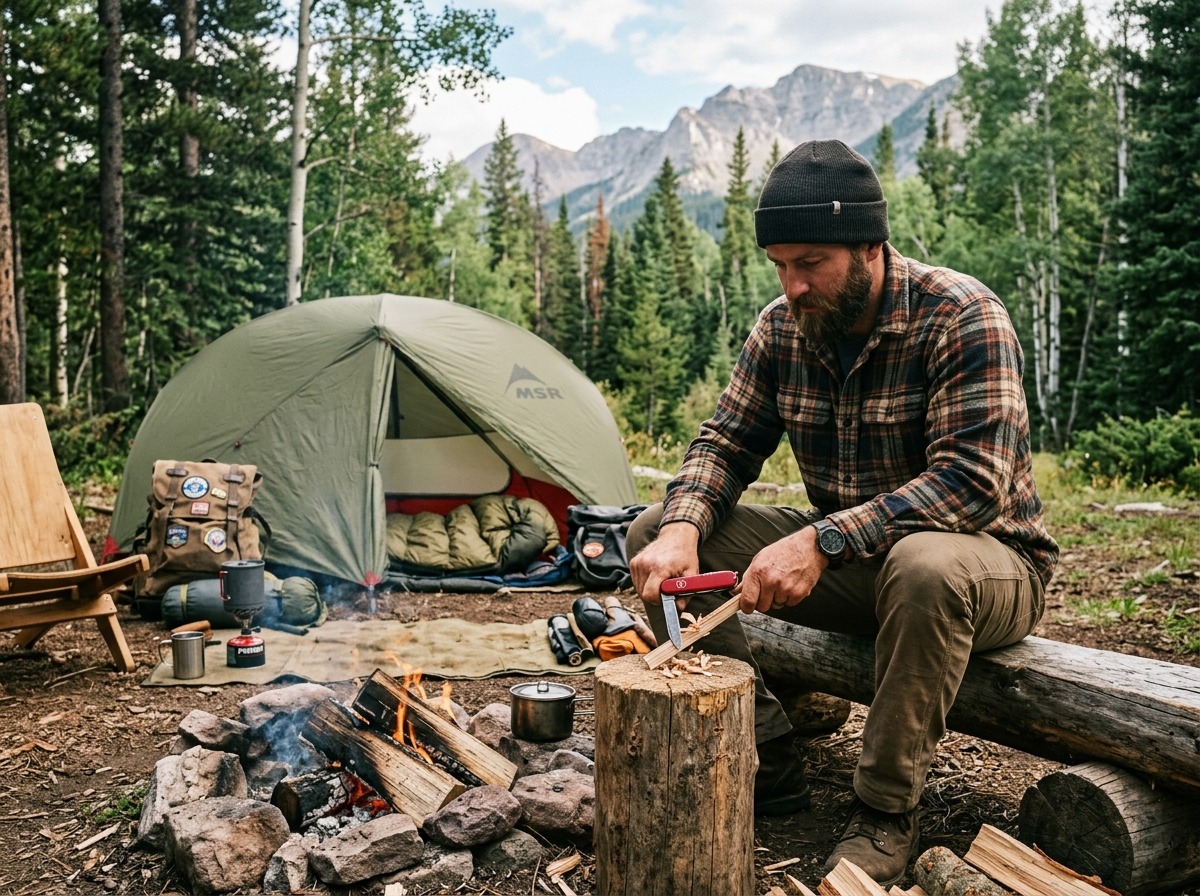
The Victorinox Hiker is the best camping choice under $50 because it includes a wood saw, a cap lifter that fits standard P-38 can openers, and an awl. The saw can handle 2-inch branches. Pair it with a cheap ferro rod for a full survival kit.
Conclusion: Your Next Durable Knife Is Within Reach
Getting a durable Swiss Army knife budget relies on choosing models with Alox or nylon scales, understanding that steel is identical across the range, and avoiding counterfeits. The Victorinox Cadet at $35 is the unbeatable champion for longevity per dollar, with the Hiker as a close second for saw users.
Forget the myth that you need to spend $100 for quality. Real-world tests prove that a simple 3-tool knife outlasts a complex 33-tool model because there is simply less to fail. Your next step is to order a Cadet or Hiker, oil the pivots, and carry it daily. In six months, you will wonder why you ever considered expensive alternatives. Make the strategic choice today—your future self will thank you every time a screw needs tightening or a package needs opening.