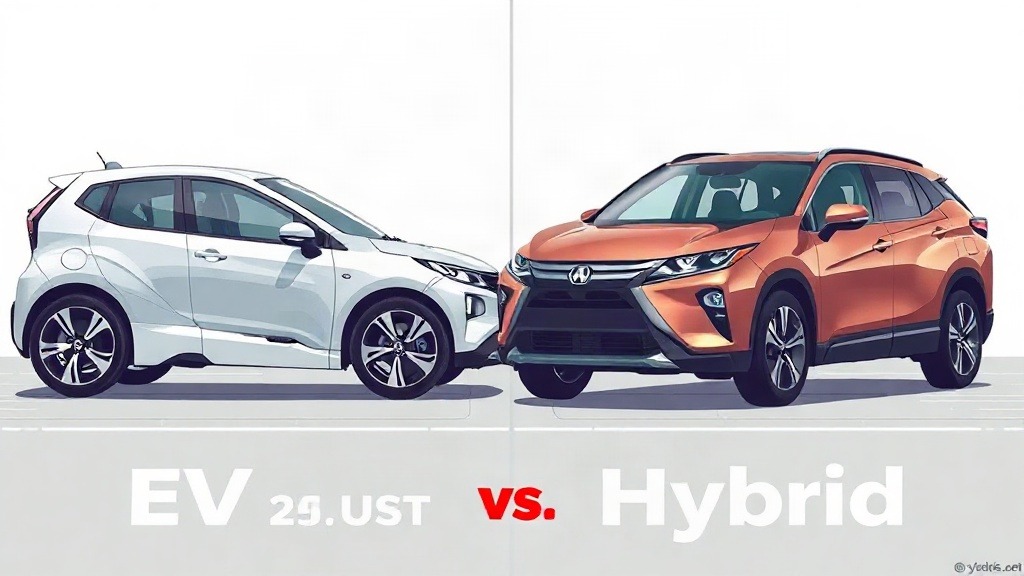
You’ve decided your next car should use less gas, and now two badges sit in front of you at the dealership. EV vs Hybrid: Which Should You Buy? comes down to a daily trade-off between plugging in and filling up.
Quick answer: Buy a battery-electric vehicle if you can charge at home or work and rarely drive more than 200 miles a day. Choose a hybrid if you park on the street, rent, or regularly drive long rural routes with few chargers. Both cut fuel bills, but only the EV removes gasoline entirely.
This comparison covers real-world costs, charging and refueling habits, driving feel, and maintenance. You’ll finish with a clear pick for your own driving pattern.
Side-by-side comparison
The table below compares the four dimensions most buyers weigh first. Notice that the gap is widest in refueling and smallest in purchase price.
| Feature | Battery EV | Hybrid (standard, non-plug-in) |
|---|---|---|
| Refueling | Charge at home or public stations | Gas station only; self-charges while driving |
| Typical purchase price | Higher upfront; many qualify for incentives | Lower upfront; often little or no incentive |
| Running cost | Lowest per mile if you charge at home | Lower than a gas car, higher than an EV |
| Range | 200–350+ miles per charge, varies by model | 500+ miles per tank, no charging needed |
| Maintenance | No oil changes; fewer moving parts | Oil changes, belts, and exhaust system still needed |
| Best use case | Home charging plus daily commutes | No home charger, frequent long trips, cold climates |
The purchase price difference has narrowed as battery costs fall, but a comparable EV still tends to cost more before incentives. Running costs flip that math quickly if you charge cheaply at home. A hybrid’s advantage is flexibility: it behaves like a normal car on any road.
Depreciation deserves its own line in your spreadsheet. Hybrids have historically held value well because the used market understands them. EVs have shown steeper early depreciation on some models, driven by rapid tech updates and incentive-driven pricing on new cars, though the best-sellers now retain value competitively. Check resale data for the specific models you’re considering rather than assuming either pattern holds.
Insurance quotes often land higher for EVs because of expensive battery packs and complex repair procedures, and some insurers charge more for hybrids too. Get quotes on both before you sign anything. Tires wear faster on heavy EVs due to instant torque and extra weight, so budget for replacements slightly sooner.
Availability and choice differ as well. Nearly every segment now offers a hybrid, from small hatchbacks to large SUVs, while EV selection concentrates in compact cars, crossovers, and premium models. If you need a specific body style or a budget entry price, the hybrid aisle is usually deeper, especially in regions where EV imports remain limited or waitlists run long.
Key differences explained
Four differences drive most of the decision. Each one matters more or less depending on where you live and how you drive.
Refueling and charging routine
An EV asks you to change a habit. You plug in at night, wake up with a full battery, and rarely visit a station. A hybrid asks for nothing new: you pull up to a pump like any gas car, and the car manages its own battery.
Upfront price and incentives
A standard hybrid typically carries a smaller price premium over its gas equivalent than a pure EV does. EV incentives vary widely by country and region, and they change often, so check current local rules before you compare sticker prices. Factor in any home charger installation cost for an EV, which a hybrid never needs.
Range and long-distance travel
Range anxiety fades for most EV owners after a few weeks of routine driving. It returns on long trips, where you plan charging stops around a public network. A hybrid eliminates that planning entirely because the engine recharges the battery as you drive.
Driving feel and maintenance
EVs deliver instant torque, near-silent running, and smooth single-speed acceleration. Hybrids feel closer to a conventional car, with the engine switching in and out. Servicing differs too: an EV skips oil changes and has fewer wear parts, while a hybrid keeps a full combustion engine and its service schedule.
Expect a noticeable drop in EV range in freezing temperatures, partly from battery chemistry and partly from cabin heating. Hybrids lose some efficiency in cold too, but their gasoline engine keeps range predictable.
Key similarities
Both options share more than shoppers expect. That overlap is why the choice often comes down to your parking situation rather than the cars themselves.
- Lower fuel use than a pure gas car. Both cut consumption, though an EV charged from the grid usually wins on cost per mile.
- Regenerative braking. Each recovers energy when slowing down, which saves fuel and reduces brake wear.
- Automatic transmission only. Neither offers a manual gearbox, so driving is simple in traffic.
- Similar safety and tech features. Modern examples of both include driver-assistance systems, touchscreen infotainment, and app-based remote controls.
- Lower emissions. A hybrid emits less than a gas-only car; an EV emits nothing from the tailpipe, and its overall footprint depends on how the local grid generates power.
- Quiet low-speed running. Both can creep through a parking lot on electric power alone, with the engine off.
- Shared ownership costs. Insurance, tires, registration, and depreciation apply to both, though rates vary by model and region.
Neither choice is a compromise on comfort or equipment. You are picking an energy strategy, not a vehicle class.
Both types qualify for the same practical perks in many places: access to cleaner-vehicle zones in some cities, parking privileges, and company car tax breaks that vary by country. Check local rules, since these benefits shift with policy.
Charging and fuel aside, the ownership rhythm matches closely. Both need tire rotations, cabin filters, brake fluid checks, and periodic inspections, and both can be serviced at most franchised dealers. Neither demands special driving techniques beyond smooth inputs, though EVs reward gentle acceleration with noticeably better efficiency.
Pros and cons of each option
Before diving into the lists, a quick framing helps. The pros below are the ones owners mention most often after a year of real use, and the cons are the recurring frustrations rather than rare edge cases. Weigh them against your own routine rather than treating any single point as decisive, because one dealbreaker for a city renter may be irrelevant to a rural commuter.
Cost comparisons only make sense when you run them over your own ownership period. A three-year buyer should weight depreciation and upfront price heavily, while a ten-year keeper should focus on fuel, servicing, and battery health. Write down your expected annual mileage and parking setup before reading further, then judge each point against those two facts.
Battery EV
Pros
- Lowest running cost per mile when you charge at home overnight.
- No gasoline, no oil changes, and far fewer service visits.
- Instant acceleration and quiet, smooth driving.
- Many regions offer purchase incentives and reduced road taxes.
Cons
- Higher sticker price before incentives than a comparable hybrid.
- Public charging adds time and planning on long trips.
- Range drops in cold weather and at sustained highway speeds.
- Home charging may be impossible if you rent or park on the street.
Hybrid
Pros
- No charging infrastructure needed anywhere you drive.
- Lower upfront cost and a familiar ownership routine.
- Long range on a single tank with no route planning.
- Strong resale demand in areas with limited charging.
Cons
- Still burns gasoline on every trip.
- Higher running cost than an EV charged at home.
- Keeps a full engine service schedule, including oil changes.
- Less responsive than an EV because the engine and battery share the load.
A hybrid is the safer default for most drivers today. An EV rewards anyone with reliable home charging and a predictable commute.
Which should you choose?
Match the car to your parking and your weekly mileage. The recommendation below covers the most common buyer profiles.
Families hauling kids and gear should weigh cargo and towing. Towing cuts EV range sharply, often by half, so a hybrid may suit caravan or trailer owners better unless you accept frequent charging stops. Families with two cars can also split the difference: one EV for commuting, one hybrid or gas car for holidays, which many households find the most practical arrangement of all.
Choose an EV if…
- You can charge at home or at work every night.
- Most days involve under 200 miles of driving.
- You live somewhere with a growing public charging network.
- You want the lowest long-term fuel and service costs.
- You value quiet, instant acceleration.
Choose a hybrid if…
- You park on the street, rent, or cannot install a charger.
- You regularly drive long distances through rural areas.
- You want the lowest upfront price with no new habits.
- Winters in your area are long and severe.
- You plan to sell within a few years in a region with weak charging.
Choose a plug-in hybrid if…
A plug-in hybrid sits between the two. It runs on electric power for short trips and switches to gasoline for longer ones. It suits drivers who can charge daily but still want a gas engine for occasional long journeys. Skip it if you never plug in, because you then carry a heavy battery without the fuel savings.
FAQ
Is a hybrid cheaper to own than an EV?
Usually not over a long period. A hybrid costs less upfront, but an EV charged at home wins on fuel and service costs. Run the numbers over five years with your own electricity and gas prices before deciding.
Can I own an EV without a home charger?
Yes, but it takes planning. You will rely on public fast charging or workplace charging. That adds time and often costs more per mile than home charging, so check what is available near you first.
Do hybrids need to be plugged in?
Standard hybrids never plug in. They recharge their small battery from the engine and from regenerative braking. Plug-in hybrids are different: they need charging to deliver their electric range.
How long do EV batteries last?
Most modern EV batteries are warrantied for eight years or around 100,000 miles. Real-world capacity loss is gradual, and many packs outlast the warranty period.
Are EVs good for long road trips?
They work, but you plan around charging stops. Fast chargers add meaningful time compared with a five-minute fuel stop. A hybrid avoids that planning entirely.
Conclusion
The right answer depends less on the cars than on your parking space and weekly mileage. With reliable home charging, an EV delivers the lowest running costs and a calmer drive. Without it, a hybrid keeps life simple and still cuts fuel use.
Start by checking two things this week: whether you can install a charger, and what public charging exists on your usual routes. Then test-drive one of each on the same day. The comparison usually settles itself once you feel the difference and see the real numbers.