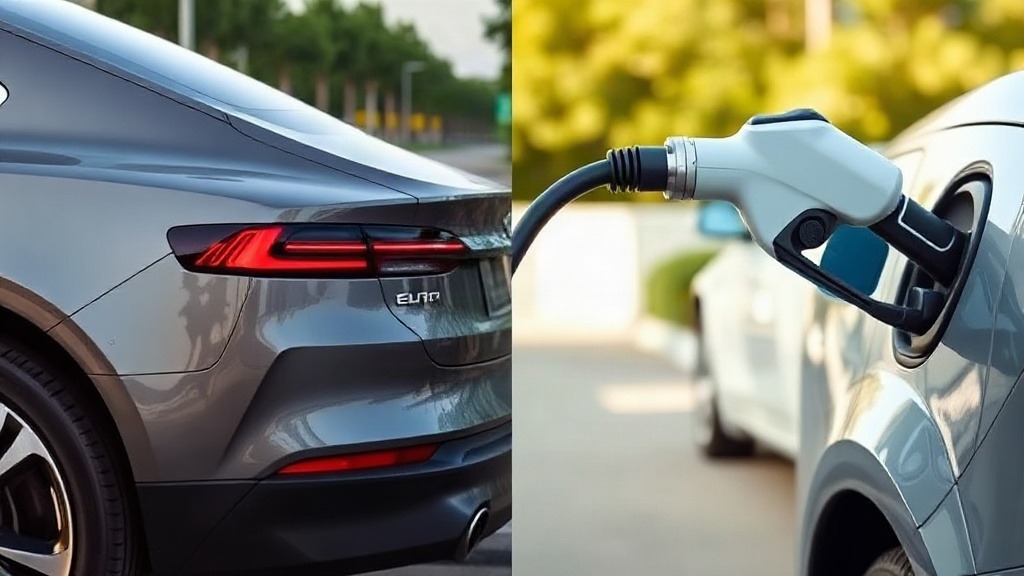
EV vs Gas Car: Which One Makes Sense in the USA? is a question thousands of American households ask every month, usually while staring at a dealership lot or a rising utility bill. The right answer depends less on hype and more on your commute, your home, and how often you take long road trips.
Quick answer: For most drivers who commute under 40 miles a day and can charge at home, an EV costs less to run and maintain. Choose gas if you rent without reliable charging access, tow heavy loads regularly, or drive long rural routes with sparse charging. Match the car to your actual weekly routine, not the occasional worst-case trip.
This comparison walks through real costs, charging realities, driving range, maintenance, and resale trends across the U.S. market. By the end, you will know which powertrain fits your household and budget.
Side-by-side comparison
Comparison: EV vs gas car across the factors that decide most purchases
The table below lines up the two options on upfront price, running costs, range, and everyday practicality. Notice that the gap is widest on fuel and maintenance, and narrowest on purchase price.
| Factor | Electric vehicle | Gas car |
|---|---|---|
| Typical new purchase price | Higher sticker price, offset by federal and state incentives | Lower sticker price, widely available used |
| Fuel cost per mile | Roughly a third to half of gasoline in most states | Varies with pump prices and mpg |
| Range per fill or charge | 200–350 miles on a full charge | 300–450 miles on a full tank |
| Refueling time | 20–40 minutes on a DC fast charger, hours at home | 5 minutes at any station |
| Routine maintenance | No oil changes, fewer moving parts | Oil, filters, belts, and exhaust repairs |
| Home charging needs | A dedicated 240V outlet or Level 2 charger | None beyond a standard garage |
| Best use case | Daily commuting with home charging | Long-distance and rural driving |
The headline is simple: EVs win on per-mile cost and upkeep, while gas cars win on flexibility and upfront affordability. Your zip code and parking situation shift that balance more than any spec sheet.
Insurance quotes deserve a line of their own in any side-by-side. Repair costs on EVs can run higher because of sensors, sealed battery packs, and a thinner network of certified body shops, so some insurers price them above a comparable gas model. Get a quote on the exact trim you plan to buy before comparing sticker prices.
Depreciation curves also diverge. Gas cars tend to shed value steadily over five to seven years. EVs have shown steeper early drops on some models, then leveled off. A three-year-old EV can be a bargain, but check battery health reports and remaining warranty before you commit.
Factor in taxes and fees too. Many states now charge EV owners a separate annual registration fee to offset lost gas tax revenue, typically a few hundred dollars. That line item rarely appears in advertised ownership costs, yet it lands on your renewal notice every year.
Key differences explained
Three differences drive nearly every EV-versus-gas decision in the U.S.: where the energy comes from, how you refuel, and what the car costs to own over time.
Energy and refueling
A gas car refuels in minutes at roughly 150,000 gas stations nationwide. An EV refuels at home overnight, which is far more convenient for daily driving but slower on road trips. Public DC fast charging has expanded quickly along interstate corridors, yet rural stretches and older apartment blocks still lag.
Charging speed depends on the car and the charger. A modern EV can add 100 to 200 miles in about 20 to 30 minutes on a fast charger. Home Level 2 charging adds roughly 25 to 30 miles of range per hour.
Upfront price and incentives
Gas cars still win on sticker price. A new compact gasoline sedan or crossover typically costs several thousand dollars less than a comparable EV before incentives. Federal clean vehicle credits and state rebates can close much of that gap, but eligibility rules on income, vehicle price, and final assembly vary, so check the current IRS guidance before you buy.
Used EVs are now a genuine budget option. Depreciation has made two- and three-year-old models notably cheaper than their original price.
Running costs and maintenance
Electricity is cheaper per mile than gasoline in most U.S. markets. An EV driven 12,000 miles a year often costs a few hundred dollars in home electricity, while a 30-mpg gas car at $3.50 per gallon spends over $1,400 on fuel. Maintenance widens the gap: no oil changes, no spark plugs, and regenerative braking that stretches brake life.
Key similarities
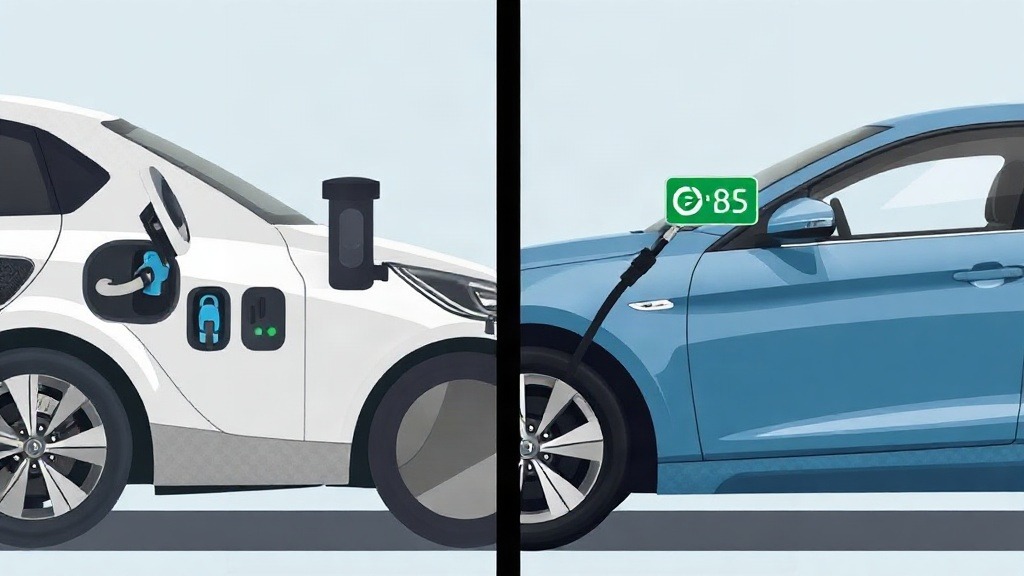
The two powertrains share more than buyers expect. Both are regulated by the same safety standards, both need tires, brakes, and cabin filters, and both depreciate.
Modern EVs and gas cars offer comparable crash protection, driver-assist features, and infotainment. Insurance premiums track vehicle value and repair costs, not fuel type, so a $45,000 EV and a $45,000 gas SUV insure similarly. Registration, parking permits, and inspection rules depend on your state, not your engine.
Both require a plan for extreme weather. Gas cars lose some efficiency in cold weather; EVs lose range in cold and heat because climate control draws from the battery. Neither is immune to winter.
Resale matters for both. Gas cars have a long, predictable resale market. EVs are newer to that market, and values have swung sharply as technology and incentives changed. Neither option is a guaranteed investment.
Both powertrains also depend on the same consumables that catch owners off guard: tires, alignment, cabin air filters, and wiper blades. EV tires can wear faster because of instant torque and heavier curb weight, so budget for replacements at similar or slightly shorter intervals than a gas car.
Warranty coverage is broadly comparable as well. Most new vehicles, electric or gasoline, carry bumper-to-bumper protection for three years or 36,000 miles and powertrain coverage for five years or 60,000 miles. EV battery packs usually get a separate eight-year guarantee, which adds peace of mind rather than a real advantage in day-to-day ownership.
Pros and cons of each option
Read these lists with your own routine in mind. A con that never touches your week, such as public charging for a two-car household with a garage, matters far less than one you hit every day. Use the points below as prompts for questions, not as a scorecard to tally.
Electric vehicle
Pros
- Lower fuel and maintenance costs for drivers who charge at home.
- Instant torque and quiet, smooth acceleration.
- Fewer moving parts mean fewer scheduled service visits.
- Home refueling removes most gas-station stops from your week.
- Federal and state incentives can reduce the effective price.
Cons
- Higher upfront price before incentives.
- Range shrinks in cold weather and at highway speeds.
- Public charging is uneven outside major corridors.
- Renters without a dedicated outlet face real charging hurdles.
- Battery replacement, though rare, is expensive.
Gas car
Pros
- Lower sticker price and a deep used market at every budget.
- Refueling takes minutes anywhere in the country.
- Predictable range regardless of weather or terrain.
- Any mechanic can service it.
- Strong for towing and heavy hauling duty.
Cons
- Higher fuel costs over the life of the car.
- More scheduled maintenance and wear items.
- Tailpipe emissions and local air pollution.
- Exposure to volatile gas prices.
- Louder, rougher driving experience.
Federal and state EV credits shift with legislation and income caps. Confirm current eligibility before signing, and never assume last year’s rules still apply.
Which should you choose?
Match the car to your week, then check the edge cases. Most buyers fall into one of four groups.
Before you commit, test the edge cases honestly. Borrow or rent the car you are considering for a weekend and drive your actual commute, including the school run and the grocery store. Charge it once from your real parking spot. One weekend of ordinary life exposes more than an hour-long test drive ever will.
Choose an EV if you can charge at home
A driveway, garage, or assigned parking spot with an outlet changes everything. If your daily driving stays under your car’s range and you charge overnight, an EV usually costs less to own. This fits suburban commuters, two-car households, and anyone with solar panels.
Choose a gas car if charging is uncertain
Renters without a dedicated outlet, drivers in rural areas with sparse charging, and households that regularly tow or haul heavy loads are better served by gas. A gas car also makes sense if your upfront budget is tight and used EVs in your area are scarce.
Consider a plug-in hybrid as a bridge
If you want electric commuting but need gas range for road trips, a plug-in hybrid splits the difference. You get 20 to 50 miles of electric range for daily driving plus a gas engine for longer journeys. It is not as cheap to run as a full EV, but it removes range anxiety.
Reliable home charging turns an EV into the cheaper, simpler choice for most daily drivers. Without it, gas or a plug-in hybrid usually wins.
FAQ
Is an EV cheaper than a gas car over five years?
Often yes for drivers who charge at home, because fuel and maintenance savings can offset the higher purchase price. The math flips if you rely on expensive public fast charging or drive very few miles. Run your own numbers with local electricity and gas prices.
Can I own an EV without a home charger?
Yes, but it is harder. You would depend on public charging, workplace chargers, or a nearby fast charger. That works for some urban drivers with short commutes, but it adds time and cost to your week.
How much does it cost to install a home charger?
A Level 2 charger and installation commonly run several hundred to a couple thousand dollars, depending on your electrical panel and wiring distance. Some utilities and states offer rebates that reduce the cost.
Do EV batteries need replacing?
Rarely during normal ownership. Most modern EV batteries are warrantied for eight years or 100,000 miles, and many last well beyond that. Replacement is costly, but it is not a routine expense.
Are EVs good for long road trips?
They work on major interstate routes with fast charging, but you should plan stops and add time. Gas cars remain simpler for spontaneous long drives, especially in remote areas.
Conclusion
EV vs Gas Car: Which One Makes Sense in the USA? comes down to a handful of personal facts: your parking, your commute, your budget, and your tolerance for planning. EVs reward drivers with home charging through lower running costs and less maintenance. Gas cars reward drivers who need flexibility, low upfront prices, and nationwide refueling.
Start with one practical step. Map your weekly driving and confirm whether you can install or access a charger at home. That single answer will point you toward the right powertrain long before a test drive does.