
You brew your morning tea or coffee with care, and you likely pay attention to the quality of your water. But have you ever considered what your kettle is adding to that water? Many plastic kettles and even some metal ones contain BPA (Bisphenol A), a chemical that can leach into your hot water.
The solution is simpler than you think: choosing a BPA free electric kettle ensures your water is pure and safe. Let’s clear up the confusion and find the perfect kettle for your kitchen.
What Is BPA and Why Is It in Kettles?
BPA, or Bisphenol A, is an industrial chemical used to harden polycarbonate plastics and epoxy resins. It’s found in everything from water bottles to food can linings. In kettles, BPA is most commonly present in the plastic components, such as the body, lid, or water window. The problem? When heated, BPA can migrate from the plastic into your water, and that is where the health concerns arise.
The Health Risks of BPA Exposure
Research links BPA to hormone disruption. It can mimic estrogen, interfering with your endocrine system. Long-term exposure has been associated with reproductive issues, metabolic disorders, and an increased risk of certain cancers. While one cup of water from a BPA-laden kettle might not cause harm, the cumulative effect of daily use is worth avoiding. This is especially true for pregnant women, children, and those with hormonal sensitivities.
Quick Takeaway: BPA is a known endocrine disruptor. Avoiding it in your kettle is a simple, effective way to reduce your daily chemical load.
How Can You Tell If a Kettle Is Truly BPA-Free?
You cannot just trust the label “BPA-free” at face value. A truly BPA free electric kettle will use alternative materials like stainless steel, borosilicate glass, or Tritan plastic for its water-contact surfaces. You need to check the manufacturer’s specifications carefully. Look for explicit statements regarding all plastic parts, not just the main body.
Red Flags and Green Lights
- Green Light: Kettles made entirely of borosilicate glass or 304 stainless steel with no plastic in the water path.
- Green Light: Products certified by third-party labs like Intertek or SGS.
- Red Flag: Kettles that list “polypropylene” or “polycarbonate” without specifying “BPA-free.”
- Red Flag: Vague marketing language like “eco-friendly” or “safe” without specific chemical disclosures.
What Are the Best Materials for a BPA-Free Kettle?
The material of your kettle is the most important factor determining safety. There are three top-tier materials to consider: stainless steel, glass, and BPA-free plastic. Each has distinct advantages and trade-offs.
| Material | Safety | Heat Retention | Durability | Ease of Cleaning |
|---|---|---|---|---|
| Stainless Steel (304/18/8) | Excellent (no plastic contact) | Excellent | Excellent | Good (can show water spots) |
| Borosilicate Glass | Excellent (inert material) | Poor (cools quickly) | Fair (can break if dropped) | Excellent (see mineral buildup) |
| Tritan (BPA-Free Plastic) | Good (lab-tested safe) | Good | Good | Good |
Why Stainless Steel Is a Top Choice
Stainless steel kettles are rugged and offer excellent heat retention. They keep water hot longer, meaning you boil less often. Look for “304” or “18/8” food-grade stainless steel. Avoid cheaper “201” stainless steel, which can corrode.
Is Glass Kettle Better for Purity?
Glass is chemically inert. It won’t leach anything into your water. A borosilicate glass kettle is resistant to thermal shock, meaning it can handle boiling water without cracking. The downside? It is fragile and shows mineral scale quickly.
Which Kettle Features Actually Matter for Daily Use?
Safety is the priority, but a kettle must also be practical. The best features are those that make boiling water effortless. A BPA free electric kettle should also be fast, quiet, and easy to pour. Do not sacrifice usability for safety.
Must-Have Features
-
- Auto Shut-Off: Essential for safety. The kettle turns off once the water reaches a boil.
- Boil-Dry Protection: Prevents the kettle from heating when empty, protecting both the kettle and your kitchen.
- Cool-Touch Exterior: Prevents burns, especially if you have children.
- 360-Degree Swivel Base: Makes it easy to lift and replace the kettle from any angle.
- Concealed Heating Element: Easier to clean and reduces limescale buildup.
Can Plastic Kettles Ever Be Safe?
Yes, but only specific types of plastic. Kettles made from Tritan, a copolyester plastic developed by Eastman, are extensively tested and certified BPA-free. Tritan is durable, clear, and does not leach estrogenic activity. However, always verify the specific model’s certification. Avoid any kettle with polycarbonate plastic, as it is made directly from BPA.
Pro Tip: If you want the convenience of a plastic kettle, choose one made entirely of Tritan or one with only Tritan components in the water contact areas. Never buy a kettle where the inner chamber is made of unidentified plastic.
How to Test If Your Current Kettle Has BPA
If you own an older kettle, you can’t always tell immediately. Look for a recycling code on the plastic parts. A code “7” often indicates polycarbonate, which contains BPA. Codes “1”, “2”, “4”, and “5” are generally BPA-free. If there is no code, or if the kettle is from a no-name brand, it is safer to replace it.
Simple Home Check
-
-
- Check for a plastic water window. This is a common source of BPA.
- Smell the water after boiling. A plastic or chemical smell is a bad sign.
- Examine the lid. Silicone seals are safe; hard plastic lids are often suspect.
-
Why Does Kettle Temperature Control Matter for Safety?
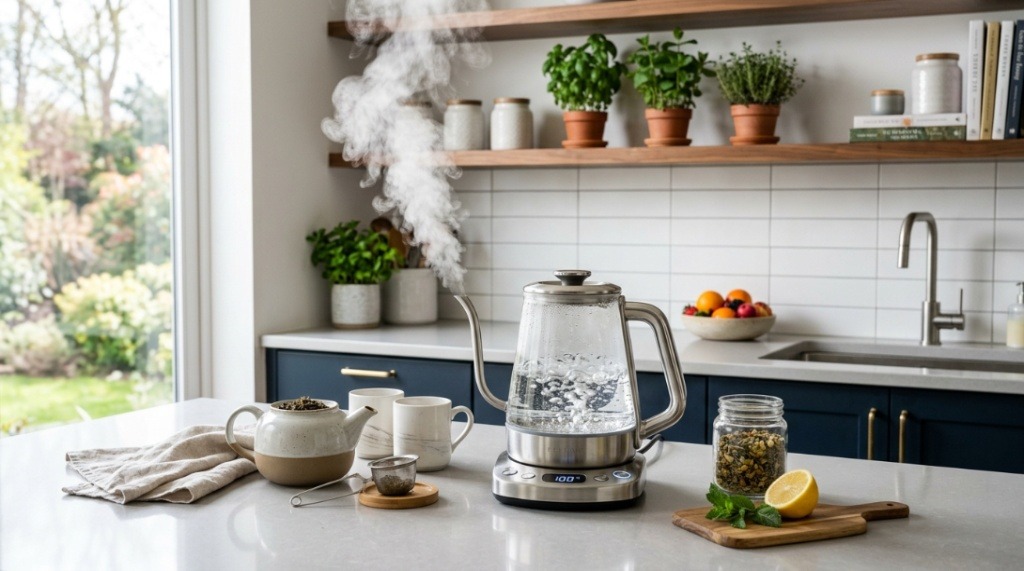
Boiling water to 212°F kills pathogens, but it can also accelerate the leaching of chemicals from plastic components. While a BPA free electric kettle is safe at high temperatures, variable temperature control offers an extra layer of safety and functionality. For delicate teas like green or white tea, you can heat water to exactly 175°F, reducing energy consumption and preserving flavor compounds.
Benefits of Variable Temperature
-
-
- Safety: Lower temperatures reduce the risk of steam burns.
- Flavor: Different teas and pour-over coffees require specific water temperatures for optimal extraction.
- Efficiency: You only heat water to the temperature you need, saving electricity.
-
How to Properly Clean and Maintain Your BPA-Free Kettle
Even the safest kettle can become a breeding ground for bacteria or mineral scale if not cleaned. Descaling is essential, especially in hard water areas. Mineral deposits can harbor bacteria and affect flavor. A clean kettle performs better and lasts longer.
Step-by-Step Descaling Process
-
-
- Fill the kettle halfway with equal parts water and white vinegar.
- Bring the mixture to a boil.
- Let it sit for 15-20 minutes to dissolve limescale.
- Discard the mixture and rinse thoroughly with fresh water.
- Boil a full kettle of fresh water and discard (repeat twice to remove any vinegar taste).
-
Alternative: Use citric acid powder. It is odorless and equally effective. Mix one tablespoon with one liter of water and follow the same process.
Which Brands Are Most Trustworthy for BPA-Free Kettles?
Several brands have built a reputation for safety and quality. Look for companies that are transparent about their material sourcing and manufacturing processes. The best brands often publish third-party lab results online.
Reputable Brands
-
-
- Cuisinart: Known for stainless steel models with clear BPA-free labeling.
- Breville: High-end kettles with variable temperature and premium materials.
- Hamilton Beach: Affordable options in glass and stainless steel.
- Fellow: Premium design kettles, all materials are explicitly listed.
- Secura: Excellent value with fully stainless steel interiors.
-
What Is the Difference Between BPA-Free and Phthalate-Free?
Many consumers confuse these terms. BPA is one chemical; phthalates are a different family of chemicals used to make plastics flexible. While a BPA free electric kettle solves one problem, you should also look for “phthalate-free” certification on any plastic parts, especially the lid seal or handle. Phthalates are also endocrine disruptors.
Expert Note: Glass and stainless steel kettles eliminate concerns about both BPA and phthalates because they contain no plastic in the water path. This is the safest option overall.
How Much Should You Spend on a Quality BPA-Free Kettle?
You can find reliable kettles between $25 and $150. Price is not always an indicator of safety. A $35 glass kettle can be just as BPA-free as a $150 stainless steel model. The price difference comes from build quality, temperature control features, and warranty. For a basic safe kettle, prepare to spend between $30 and $60.
Budget Breakdown
-
-
- $20-$40: Functional, no-frills kettles (glass or plastic). Often have fewer safety certifications.
- $40-$80: Good build quality, stainless steel interior, clear BPA-free documentation.
- $80-$150: Premium materials (304 steel, borosilicate glass), variable temperature, longer warranty.
-
Can You Trust “BPA-Free” Labels on Cheap Kettles?
Be cautious. Some inexpensive manufacturers use the label without proper testing. In 2020, independent tests revealed that some products labeled “BPA-free” still contained BPA or similar replacements like BPS (Bisphenol S). BPS poses similar health risks. To verify a claim, look for a certification logo from a recognized lab.
What to Look For
Seek out kettles that meet NSF/ANSI Standard 63 or those certified by SGS. These third-party validations are rare in budget kettles but provide the highest confidence. If a brand cannot provide lab results, choose a different model.
Choosing non-toxic kitchen appliances is a massive step toward a cleaner lifestyle. Just as we detox our bodies externally knowing how spa foot soaks reduce tired legs after a long dayensuring our daily drinking water is free of chemical leaching protects our health from the inside out.
Frequently Asked Questions
How do I know if my kettle has BPA?
Check the plastic components. If they have a recycling code “7” or say “polycarbonate,” the kettle likely contains BPA. The safest way to confirm is to contact the manufacturer and ask for a material safety data sheet.
Are all stainless steel kettles BPA-free?
Not necessarily. Some stainless steel kettles have plastic lids, water windows, or handles that contain BPA. Always verify that all water-contact parts are BPA-free. A fully stainless steel interior with a glass window is the safest bet.
Can BPA leach from a kettle into my cold water?
Leaching is accelerated by heat. Cold water in a plastic kettle is less likely to leach BPA, but it is still possible over long periods. For cold water storage, glass or stainless steel containers are always preferred.
Is BPA-free the same as non-toxic?
No. “BPA-free” only means the product does not contain Bisphenol A. It could still contain other bisphenols like BPS or BPF, which may be just as harmful. Look for kettles that are explicitly free of all bisphenols.
What is the safest material for an electric kettle?
Borosilicate glass and 304 stainless steel are the safest materials. They are chemically inert and do not leach any substances into your water, even at high temperatures. Both are 100% BPA-free by nature.
How often should I descale my BPA-free kettle?
Descale every 1-3 months, depending on your water hardness. If you see white flakes or scaling, descale immediately. Regular maintenance ensures your kettle works efficiently and your water tastes clean.
Do expensive kettles boil water faster?
Not significantly. Most standard kettles have a power draw between 1500W and 1800W. Price differences come from build quality, temperature precision, material quality, and safety certifications, not boiling speed.
Conclusion
Choosing a BPA-free electric kettle is one of the easiest changes you can make for a healthier kitchen. You don’t need to overthink it: focus on material first. Glass and stainless steel offer the highest safety and durability. Avoid hidden plastic components, and always verify third-party certifications. A quality kettle will last for years, deliver pure-tasting water, and give you peace of mind with every cup. Your health is worth that small investment. Start your search today with a clear checklist of safe materials and trusted features.