Every golfer knows the feeling of reaching for a towel mid-round only to find it soaked through and useless. A good golf towel is one of those small investments that quietly improves your game in ways you do not notice until it is gone. However, with so many options available, the choice between microfiber and cotton can feel surprisingly complicated.
Both materials have loyal fans. Both have genuine strengths. The right choice depends on how you play, where you play, and what you expect from your towel during a round. This article breaks down the key differences so you can make a confident, informed decision.
Why Your Golf Towel Matters More Than You Think
A golf towel does more than wipe your hands. It cleans your clubfaces between shots, removes debris from your golf balls, and keeps your grips dry during wet or humid rounds. Dirt on a clubface affects contact and spin. A wet grip changes how a club feels in your hands and can cause it to twist through impact.
Therefore, a towel that stops working halfway through a round is not just inconvenient. It actively affects your performance. Whether you prefer absorbent golf towels that soak up moisture instantly or something that dries quickly between uses, understanding each material helps you choose wisely.
What Is Microfiber and How Does It Work?
Microfiber is a synthetic fabric made from extremely fine strands of polyester and nylon. The fibres are split during manufacturing to create a surface with millions of tiny hooks and gaps. These gaps trap dirt, moisture, and debris at a microscopic level, which is why microfiber cleans so effectively even without scrubbing.
The split fibres also create a large surface area within a thin, lightweight fabric. This is why a microfiber towel can absorb a surprising amount of water without feeling heavy or bulky. Additionally, those same fine fibres release moisture quickly when wrung out or exposed to air, which is what gives microfiber its rapid drying properties.
Microfiber towels are used widely across sports, cleaning, and automotive care for exactly these reasons. In golf, these properties translate directly into practical performance benefits on the course.
What Makes Cotton Golf Towels Different?
Cotton is one of the oldest and most trusted textile materials in the world. It is grown naturally, feels soft against the skin, and has excellent absorbency due to its hollow fibre structure. When cotton fibres contact water, they swell and draw moisture into the core of the fibre.
This process makes cotton highly effective at absorbing large volumes of liquid. However, it also means that cotton holds onto that moisture for a long time. A cotton towel used heavily in the first nine holes may still feel damp, or even wet, by the time you reach the back nine.
Cotton golf towels are often preferred for their feel and appearance. Thick terry cotton has a premium texture and a classic look that many golfers associate with quality. Additionally, cotton is a natural material, which appeals to players who prefer to avoid synthetic fabrics where possible.
Absorbency: Which Material Soaks Up More?
Absorbency is probably the first thing golfers think about when choosing a towel. You want something that picks up moisture immediately and does not smear it around.
Microfiber wins on speed. The split-fibre structure grabs moisture on contact and pulls it into the fabric almost instantly. You do not need to press hard or rub repeatedly. A single wipe picks up the water and holds it inside the fabric rather than spreading it across the surface.
Cotton absorbs more total volume over time. A thick terry cotton towel can hold more liquid at full saturation than an equivalently sized microfiber towel. However, reaching that saturation point is part of the problem. Once cotton is heavily loaded with moisture, it struggles to absorb more until it dries out.
For golfers who play in light to moderate conditions, both materials perform well. However, in humid climates or during rainy rounds, the faster initial absorbency of microfiber gives it a practical edge as an absorbent golf towel throughout an entire round.
Drying Speed: A Critical Factor on the Course
A towel that stays wet is less useful the longer your round goes on. This is where the two materials differ most clearly.
Microfiber dries remarkably fast. Wring it out once and it sheds most of its held moisture within seconds. Hang it from your bag in open air and it can be dry or nearly dry within a few minutes. This makes microfiber an ideal quick-dry golf towel for long rounds, multi-round weekends, or situations where you do not have time to wash and dry your towel between sessions.
Cotton dries slowly. A saturated terry cotton towel can take hours to dry completely, even in warm conditions. In humid weather or during a packed golf schedule, this can mean starting a second round with a towel that is still damp from the previous day. For golfers who play frequently, this is a meaningful drawback.
Therefore, if drying speed is a priority for you, microfiber is the stronger choice by a significant margin.

Cleaning Performance: Which Towel Does a Better Job on Clubs and Balls?
Keeping your clubs and balls clean during a round is one of the most important functions of a golf towel. Grass stains, mud, and moisture on a clubface change how the ball spins off the face and reduce the effectiveness of the grooves.
Microfiber excels here. The microscopic fibres reach into the grooves of a clubface and pull out embedded dirt and debris. You do not need to scrub aggressively. A short, firm wipe across the face picks up far more grime than a similar action with a cotton towel. Golf cleaning towels made from microfiber are particularly effective after bunker shots or in muddy conditions where the clubface needs thorough cleaning.
Cotton cleans adequately for general wiping. However, its fibres are thicker and rounder, which means they sit on the surface rather than getting into the fine details of grooves and textures. For basic moisture removal, cotton performs well. For detailed cleaning of clubfaces, microfiber is more thorough.
Durability and Long-Term Value
A golf towel needs to hold up through frequent washing, outdoor use, and regular abrasion against metal clubheads and rubber grips.
Microfiber is durable when cared for correctly. It resists tearing and maintains its cleaning properties through hundreds of wash cycles. However, microfiber should be washed in cool or warm water rather than hot, and fabric softener should be avoided entirely. Softener coats the fine fibres and reduces their ability to absorb and clean. With proper care, a quality microfiber towel lasts for years.
Cotton is similarly durable and more forgiving with washing. It tolerates higher temperatures and is less sensitive to care mistakes. Terry cotton does wear over time, with the looped pile gradually flattening after many washes, but it takes a long time to reach a point where performance is noticeably affected.
Additionally, cotton towels tend to be available in a wider range of thicknesses and qualities. A high-GSM terry cotton towel feels luxurious and lasts extremely well. A cheap, thin cotton towel will deteriorate quickly. Therefore, the quality of the individual product matters as much as the material itself when judging long-term value.
Weight and Practicality on the Course
Weight is a genuine consideration, especially for golfers who carry their bags rather than using a cart.
Microfiber towels are significantly lighter than cotton equivalents. A standard microfiber golf towel weighs around 60 to 100 grams. A comparable terry cotton towel can weigh two to three times as much, and even more when wet. Over 18 holes, that difference adds up.
Microfiber towels are also more compact. They fold flat and take up less space clipped to your bag. Cotton towels are bulkier but have a more traditional look that many golfers prefer for the aesthetic of their setup.
Which Type Is Right for You?
Both materials are legitimate choices, and the right answer depends on your priorities.
Choose microfiber if you play frequently, play in humid or wet conditions, want the best club-cleaning performance, or prefer a towel that dries fast between uses. Quick-dry golf towels made from microfiber suit active golfers who demand consistent performance in all conditions.
Choose cotton if you value softness and a premium feel, prefer natural materials, play occasionally in mild conditions, and do not mind a heavier, slower-drying towel. A thick terry cotton towel offers comfort and a classic appearance that many traditional golfers appreciate.
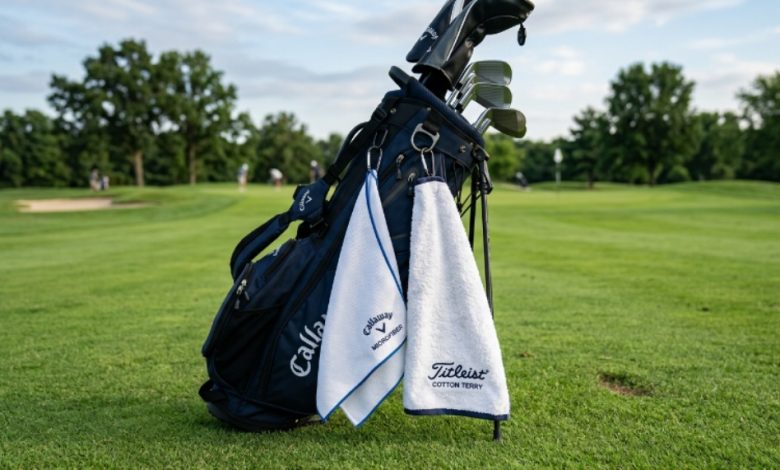
Some golfers solve the problem entirely by carrying both. A small microfiber towel for cleaning clubs and balls, and a larger cotton towel for wiping hands and drying equipment after a wash, gives you the benefits of each material where they matter most.
Conclusion
The debate between microfiber and cotton golf towels comes down to priorities. Microfiber offers faster drying, superior cleaning performance, and lighter weight, making it the more practical choice for frequent and competitive golfers. Cotton delivers softness, high saturation absorbency, and a premium feel that appeals to traditional players.
For most golfers who want reliable, all-condition performance, a quality microfiber option is the stronger all-round choice. It functions as an effective absorbent golf towel, a dependable quick-dry golf towel, and the best golf cleaning towel for keeping clubs in top condition throughout a round. However, if feel and aesthetics matter most to you, a well-made cotton towel will never let you down in moderate conditions.
Whichever you choose, the key is to buy quality. A good towel from either category will last for years and improve your experience on the course from the very first round.
Frequently Asked Questions
Can I use a microfiber towel to clean golf club grooves effectively?
Yes. Microfiber is actually better than cotton for cleaning grooves. The ultra-fine fibres reach into the narrow channels of a clubface and pull out embedded dirt and grass without scratching the surface. A short, firm wipe is usually enough to restore a clean face.
How often should I wash my golf towel?
After every round, ideally. Golf towels collect grass, soil, oils from your hands, and moisture throughout a round. Washing after each use keeps them performing at their best and prevents bacteria and odour from building up.
Does fabric softener damage microfiber golf towels?
Yes. Fabric softener coats the fine fibres in microfiber and significantly reduces their ability to absorb and clean. Always wash microfiber in cool or warm water without softener. Air drying or tumble drying on low heat is recommended.
Are there golf towels that combine microfiber and cotton?
Yes, some manufacturers produce blended towels that use a microfiber face for cleaning and a cotton terry backing for absorbency. These can offer a useful balance, though dedicated microfiber or cotton options often outperform blends in their respective strengths.
What size golf towel should I buy?
The most popular sizes are around 40 x 60 cm for a standard cart or bag towel, and smaller 30 x 30 cm options for a dedicated club-cleaning towel. Larger waffle-style towels around 50 x 80 cm are popular for drying hands and equipment after using a water brush. Choose based on what you use your towel for most.