Choosing the right golf hat seems simple at first. You pick something that looks good, fits on your head, and protects you from the sun. However, the reality is a little more nuanced than that. A hat that fails on the course can distract you, cause overheating, or leave you with a sunburn. On the other hand, the right one disappears into your gear and lets you focus entirely on your game.
This golf hat buying guide is designed to help you make a smart, informed choice. Whether you play twice a week or twice a year, the tips here will point you toward a hat that serves you well through every round.
Why Your Golf Hat Choice Actually Matters
Many golfers underestimate the role a hat plays in their overall performance. However, spending three to five hours outdoors under direct sun puts real stress on your body. A poorly made hat traps heat and moisture. This raises your core temperature over time, which leads to fatigue and poor concentration.
Additionally, a hat that fits badly becomes a constant irritation. It shifts when you swing, blocks your peripheral vision, or leaves a pressure headache after eighteen holes. These are small problems that quietly pile up throughout your round.
Therefore, treating your hat as proper performance gear rather than an afterthought will genuinely improve how you feel on the course.
Understanding the Main Types of Golf Hats
Before diving into features, it helps to understand what your main options are. Each style has its own strengths and trade-offs.
Baseball-Style Golf Caps
This is the most popular style on the course today. It offers a structured front panel, a curved brim, and an adjustable back strap. It is versatile, easy to find, and works well for most conditions. Additionally, it pairs naturally with standard golf attire.
Bucket Hats
Bucket hats have made a strong comeback in 2025 and continue gaining popularity in 2026. They offer a 360-degree brim that shades your face, ears, and neck simultaneously. They are excellent for very sunny or windy days. However, they tend to feel warmer than caps on hot days unless specifically designed with breathable panels.
Visors
A visor is essentially a brimmed band without a crown. This makes it the coolest option in terms of heat management. Your head stays completely open to airflow. However, it offers no UV protection on the top of your head. Therefore, visors work best for players with thicker hair or those who apply sunscreen to their scalp.
Wide-Brim Sun Hats
Wide-brim hats offer the most sun protection of all styles. They are common among golfers who play in very hot, exposed climates. However, a large brim can interfere with vision during certain shots, especially when looking up at the ball in flight. Look for styles with a slightly shorter back brim to address this issue.
The Most Important Feature: Breathability
If you only focus on one feature, make it airflow. Breathable golf caps are the single most impactful upgrade you can make, especially during summer rounds. When a hat breathes properly, sweat evaporates quickly. Your scalp stays cooler. Your focus stays sharper.
Look for hats that use open-mesh panels along the back and sides. This construction allows warm air to escape from the crown rather than building up inside. Additionally, some hats use laser-perforated fabric panels instead of traditional mesh. These offer a more polished look while still providing solid ventilation.
Avoid hats made entirely from tightly woven synthetic fabric or thick cotton. These materials trap heat and retain moisture. They may look sleek, but they will make you uncomfortable within the first few holes on a warm day.
Choosing the Right Material
Material choice goes hand in hand with breathability. Here is a breakdown of the most common options and how they perform on the course:
- Polyester and nylon blends are lightweight, quick-drying, and moisture-wicking. They are the top choice for performance-focused golfers. Additionally, these materials hold their shape well even after repeated washing.
- Cotton is soft and comfortable but absorbs moisture rather than moving it away from your skin. It is better suited to cooler days or casual rounds.
- Spandex or elastane is often blended with other fabrics to add stretch. This improves the fit and ensures the hat moves with you rather than against you during your swing.
- Recycled fabrics are increasingly popular in 2026. Many brands now offer performance caps made from recycled polyester without any reduction in quality.
Getting the Fit Right
A hat that does not fit properly will cause problems no matter how good its other features are. Fortunately, most modern golf hats are highly adjustable. However, the type of adjustment system matters.
Snapback Adjusters
Snapback closures offer multiple set positions. They are durable and easy to use. However, the stepped sizing means you may land between two settings and never get a perfectly snug fit.
Velcro Straps
Velcro closures allow more gradual adjustment than snapbacks. However, they tend to wear out faster over time and can catch on hair or other fabrics.
Fitted and Stretch-Fit Options
Some golfers prefer a fitted cap for a cleaner, more tailored look. These come in specific sizes. Additionally, stretch-fit hats use elastane in the band to conform to your head shape without any clasp at all. Many players find these the most comfortable option for long rounds.
When trying on a hat, the band should sit flat around your head without squeezing your temples. There should be no lifting at the front when you look down, which is a common issue during the putting stance.
UV Protection and Sun Safety
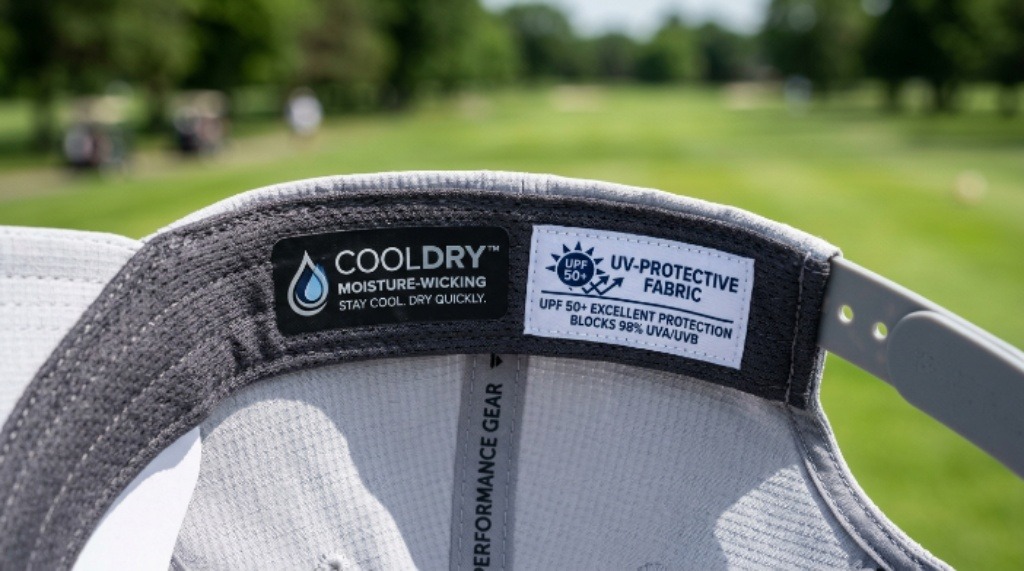
Sun protection is one of the primary reasons golfers wear hats. Therefore, understanding UPF ratings is important. UPF stands for Ultraviolet Protection Factor. A hat with a UPF rating of 30 blocks around 97 percent of UV radiation. A UPF 50 rating blocks over 98 percent.
Not all hats include a UPF rating on the label. However, tightly woven or coated fabrics typically offer better UV protection than loosely woven materials. A wide brim also adds shade and reduces your overall sun exposure.
Additionally, consider the color of your hat. Darker colors absorb more UV rays and offer better protection. However, they also absorb more heat. Lighter colors reflect sunlight but offer slightly less UV blocking. On hot days, a light-colored hat with a high UPF rating gives you the best of both worlds.
Sweat Management and Moisture-Wicking Sweatbands
The sweatband is the interior strip that sits against your forehead. It plays a crucial role in keeping sweat from dripping into your eyes during a round. Look for a sweatband made from moisture-wicking fabric. Some hats use terry cloth, which absorbs sweat but does not dry quickly. Others use performance fabric that both absorbs and disperses moisture faster.
A removable or replaceable sweatband is an added bonus. It allows you to wash just the band between rounds without washing the entire hat. This also extends the overall life of your hat considerably.
Style, Branding, and Course Dress Codes
Golf has a rich tradition of smart casual attire. However, the sport has evolved and most modern courses are relaxed about headwear choices. Still, it is worth checking the dress code of any course you play regularly, especially private clubs.
Beyond rules, style matters to many golfers. Fortunately, you do not have to choose between performance and appearance. Most leading brands now design breathable golf caps that look sharp while delivering technical performance. Additionally, neutral colors like white, navy, grey, and black suit almost any outfit and remain timeless on the course.
Price vs. Value: What Should You Expect to Spend?
Golf hats range from under ten dollars to over sixty. However, the sweet spot for most recreational golfers is between 0 and 0. In this range, you will find hats with good breathability, solid construction, moisture-wicking sweatbands, and UPF protection.
Premium hats above 0 typically offer superior fabric technology, more refined construction, or prestige branding. They are worth the investment for frequent players. However, a casual golfer who plays monthly does not need to spend at the top of the market.
Additionally, buying two mid-range hats is often smarter than one expensive hat. You can rotate them between rounds, wash them more freely, and adapt to different weather conditions.
Conclusion
The right golf hat does more than keep the sun off your face. It regulates your temperature, manages sweat, protects your skin, and keeps you comfortable through every swing. Choosing wisely means looking beyond looks alone.
Focus on breathability first, particularly breathable golf caps with mesh or perforated panels. Then consider material, fit, UV protection, and sweatband quality. Match your choice to your climate, playing frequency, and budget. Additionally, do not overlook the sweatband and adjustment system, as these small details define how the hat actually feels after four hours of play.
With the guidance in this golf hat buying guide, you are fully prepared to find a hat that works as hard as you do on the course. The perfect hat is out there, and now you know exactly how to find it.
Frequently Asked Questions
1. What type of golf hat is best for hot weather?
For hot weather, a lightweight cap with open-mesh panels on the back and sides is your best option. Visors are also excellent because the crown is completely open, allowing maximum airflow. Look for moisture-wicking fabric and a high UPF rating to stay cool and protected.
2. Should I choose a fitted or adjustable golf cap?
This comes down to personal preference. Fitted caps offer a cleaner silhouette and can feel more secure. However, adjustable caps give you flexibility if your head size changes slightly or if you share gear. Stretch-fit caps are a good middle ground, offering the look of a fitted cap with built-in flexibility.
3. How often should I wash my golf hat?
You should wash your golf hat after every two to three rounds, or immediately after a particularly sweaty game. Most performance caps can be hand-washed with mild detergent and left to air dry. Avoid machine drying as heat can distort the brim and shrink the band.
4. Are bucket hats acceptable on the golf course?
Yes, bucket hats are widely accepted at most public and resort courses in 2026. They have become a mainstream choice among players of all ages. However, some traditional or private clubs may prefer conventional cap styles. Always check the dress code before your round if you are unsure.
5. What UPF rating should I look for in a golf hat?
A UPF rating of 30 or higher is considered good protection and is adequate for most golfers. If you play frequently in very sunny climates, aim for UPF 50 or UPF 50+. Additionally, remember that a hat alone does not protect your face and neck completely. Use sunscreen in combination with your hat for full coverage.
Related Topics:
A Perfect Skateboard for Boys and Girls: Sangde Easy Way 31” Cruiser Review
Houston Skateboard Shoes: Buying Guide & Reviews